
Advanced Skin Rejuvenation with SmartXide Tetra Technology
If you’re looking to improve skin texture, reduce fine lines, and restore a more radiant complexion, DEKA CO₂ laser resurfacing is one of the most powerful non-surgical skin rejuvenation treatments available. At our Brentwood location, we use advanced DEKA SmartXide Tetra CO₂ laser technology, which delivers precise fractional energy to resurface the skin and stimulate collagen production for smoother, healthier-looking skin.
CO₂ laser resurfacing has long been considered the gold standard for treating sun damage, acne scars, wrinkles, and uneven texture, offering noticeable improvements after just one treatment. By triggering the body’s natural healing response and collagen remodeling, the treatment can improve skin quality for months after the procedure.
What Is the DEKA CO₂ Laser?
The DEKA SmartXide Tetra CO₂ laser is an advanced fractional laser resurfacing system designed to improve the appearance of aging or damaged skin. The laser delivers highly controlled pulses of energy that remove damaged skin cells while stimulating the deeper layers of the skin to produce new collagen.
Modern fractional CO₂ lasers treat the skin in tiny microscopic columns rather than removing an entire layer of skin at once. This approach allows untreated areas of skin to help speed healing and reduces downtime compared with older laser resurfacing techniques.
The DEKA system is particularly known for its high-pulse technology, which delivers energy precisely while minimizing excess heat in surrounding tissue.
What Is the DEKA CO₂ Laser?
The DEKA SmartXide Tetra CO₂ laser is an advanced fractional laser resurfacing system designed to improve the appearance of aging or damaged skin. The laser delivers highly controlled pulses of energy that remove damaged skin cells while stimulating the deeper layers of the skin to produce new collagen.
Modern fractional CO₂ lasers treat the skin in tiny microscopic columns rather than removing an entire layer of skin at once. This approach allows untreated areas of skin to help speed healing and reduces downtime compared with older laser resurfacing techniques.
The DEKA system is particularly known for its high-pulse technology, which delivers energy precisely while minimizing excess heat in surrounding tissue.
What Skin Concerns Can DEKA CO₂ Treat?
DEKA CO₂ laser resurfacing is a versatile treatment used to address many common skin concerns.
Common Conditions Treated
- Fine lines and wrinkles
- Acne scars and surgical scars
- Sun damage and age spots
- Uneven skin tone and texture
- Enlarged pores
- Mild skin laxity
- Dull or aging skin
Many patients choose this treatment because it can improve multiple skin concerns simultaneously, resulting in smoother, brighter, and more youthful-looking skin.
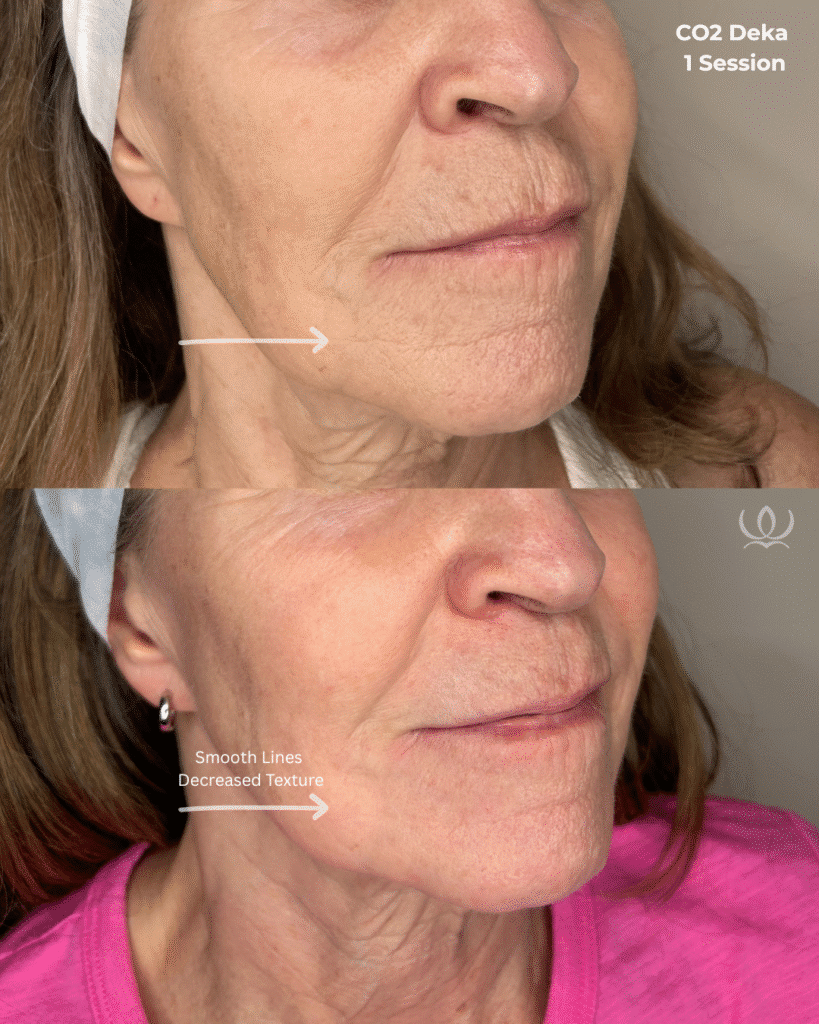
How DEKA CO₂ Laser Resurfacing Works
The DEKA CO₂ laser works through a process known as fractional ablative resurfacing. This means that surrounding untreated skin helps accelerate the healing process.
1.) Precise Laser Energy Delivery
The laser emits highly focused beams of light that create microscopic treatment zones in the skin.
2.) Removal of Damaged Skin Cells
These tiny laser columns vaporize damaged skin cells from the surface layer.
3.) Collagen Stimulation
The heat from the laser stimulates collagen production deep in the dermis, which helps tighten and rejuvenate the skin over time.
4.) Natural Skin Renewal
As the skin heals, new healthy skin replaces damaged tissue, improving texture, tone, and elasticity.
Benefits of DEKA CO₂ Laser Treatment
Patients choose DEKA CO₂ resurfacing because it provides significant improvements in skin quality without surgery.


Recovery and Downtime
Recovery after CO₂ laser resurfacing varies depending on the depth and intensity of the treatment. Lighter treatments may involve only a few days of recovery, while deeper resurfacing treatments can require additional healing time.
Most patients experience 5–10 days of visible downtime, followed by gradual improvement in skin tone and texture as the skin continues to heal and produce new collagen.
Day 1
Redness and swelling may continue during the first few days.
The skin may feel dry, tight, or sensitive, and some areas may begin developing a slightly bronzed appearance as the treated skin prepares to shed.
Keeping the skin moisturized and protected during this stage is important to support proper healing.
Days 2-3
During this stage, peeling and flaking typically begin as the outer layer of damaged skin gradually sheds.
This process allows new, healthier skin cells to surface.
The peeling may resemble mild sunburn peeling and usually occurs gradually rather than all at once.
Days 3-5
During this stage, peeling and flaking typically begin as the outer layer of damaged skin gradually sheds.
This process allows new, healthier skin cells to surface.
The peeling may resemble mild sunburn peeling and usually occurs gradually rather than all at once.
Days 5-7
Most of the visible peeling begins to resolve, revealing fresh new skin underneath.
At this stage, the skin may still appear pink or slightly sensitive, which is a normal part of the healing process.
Many patients begin to feel comfortable returning to normal routines.
Weeks 2-4
The pinkness gradually fades as the skin continues to recover.
Skin tone typically becomes more even, and the texture continues improving as new skin fully develops.
At this point, many patients begin seeing clearer improvements in smoothness and radiance.
Months 1-3
While the surface of the skin has healed, the deeper remodeling process continues beneath the skin.
Collagen production increases during this time, which can lead to continued improvements in skin firmness, texture, and overall appearance.
Up to 6 Months
Collagen remodeling may continue for up to six months after treatment.
During this time, the skin can continue to look smoother, brighter, and more youthful as new collagen strengthens the skin’s structure.